


![[ National Tax Association ]](https://ntanet.org/wp-content/themes/nta-custom/library/images/nta-whitebg-web-top.svg "National Tax Association")

“Looking in the Mirror: Do We as Policy Advisors, Analysts, and Teachers Bear Some Responsibility for Today’s Policy Messes?”
James Alm, Gary A. Hoover, Alex Rees-Jones, Sally Wallace, and Eugene Steuerle
Thursday, November 12, 2026
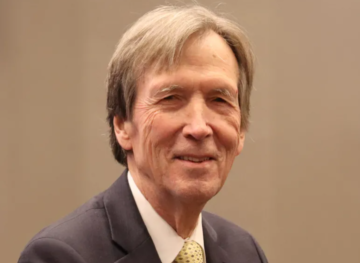
James Alm is Professor Emeritus of Economics at Tulane University. He has also taught at Georgia State University, the University of Colorado at Boulder, and Syracuse University. His teaching and research interests lie in the area of public economics, and much of his research has focused on the behavioral, distributional, allocative, and revenue effects of taxes, with a particular focus on tax compliance, the income tax treatment of the family, and fiscal federalism. Recently, he was President of the Southern Economic Association, and he received its Distinguished Fellow Award in 2023. He has been especially active in the National Tax Association, including serving as its President in 2020-2021 and receiving its Daniel M. Holland Medal in 2025.

Gary “Hoov” Hoover is the Executive Director of the Murphy Institute at Tulane University. He is also a professor of economics and is an affiliate professor of law. Dr. Hoover received his Ph.D. in Economics from Washington University in St. Louis in 1998. He has published numerous scholarly research papers, book chapters, books on topics concerning income redistribution/poverty and political economy. He is the author of the book Ladder or Lottery: Economic Promises and the Reality of Who Gets Ahead. Dr. Hoover was the co-chair of the American Economic Association Committee on the Status of Minority Groups in the Economics Profession from 2011 to 2024. From 2022 to 2023 he was the president of the Southern Economic Association. Dr. Hoover is the founding and current editor of the Journal of Economics, Race, and Policy. Dr. Hoover is a network member at the Center for Economic Studies & IFO Institute in Munich, Germany. He has also been a guest professor at the Universities of Hannover and Konstanz in Germany, the University of Vienna in Austria and X’ian University in China.

Lori Montgomery is an award-winning journalist who served until recently as Politics and Government Editor of the The Washington Post, leading a staff of 120 reporters and editors covering official Washington. During 26 years at The Post, she also served as Business Editor, overseeing coverage of the economy and technology, and she was the paper’s economic policy reporter during the Obama administration, covering Washington’s response to the 2008 financial crisis and the fiscal battles that followed. A former foreign correspondent who covered the emerging economies of Central Europe and the war over Kosovo in the late 1990s, she has also worked at newspapers in Michigan, Texas and Idaho. A graduate of Northwestern University’s Medill School of Journalism, she has three times led teams that won the Pulitzer Prize, the highest award in American journalism: in 2015, for a project that tracked fatal police shootings; in 2019, for a project that revealed the tangible effects of climate change; and just last year, for investigative coverage of Elon Musk’s DOGE Service and its campaign to downsize the federal workforce.

Alex Rees-Jones is an Associate Professor in the Business Economics and Public Policy Department at Wharton. He also serves on the Board of Editors of the American Economic Review, as an Associate Editor at Management Science, as a Research Associate at the National Bureau of Economic Research, and as a Senior Fellow at the Leonard Davis Institute. He received his Ph.D. in Economics from Cornell University in 2013 and completed a postdoctoral fellowship at the National Bureau of Economic Research in 2014. In his research, Alex explores the ways in which psychological biases and imperfect cognition affect economic policy analysis. A major area of application is public finance, examining how citizen’s imperfect responses to tax incentives affect the assessment of tax policy.
 Eugene Steuerle is a co-founder of the Urban-Brookings Tax Policy Center, the Urban Institute’s Center on Nonprofits and Philanthropy, its Retirement Project, and ACT for Alexandria, a community foundation. He also served as deputy assistant secretary of the US Department of the Treasury for Tax Analysis and as the original organizer and coordinator of Treasury’s study that led to the Tax Reform Act of 1986. A past NTA president and recipient of NTA’s Davis-Davie Public Service Award, he is the author, coauthor, or coeditor of 20 books and more than 1,500 articles and columns.
You can find more information at www.Steuerle.org, his free column at https://governmentwedeserve.substack.com/, and his latest book, Abandoned: How Republicans And Democrats Deserted The Working Class, The Young, And The American Dream, on Amazon, or contact him for a free PDF.

Sally Wallace, Managing Director, Ernst & Young LLP, focuses on public finance in the US and in developing countries. Prior to joining the firm, she was Dean of the Andrew Young School of Policy Studies at Georgia State University. She started her career as a financial economist with the U.S. Department of the Treasury. She is helping the Quantitative Economics and Statistics group expand its international footprint in the areas of public finance management, impact evaluation and economic analysis. She holds a Ph.D. in Economics from the Maxwell School at Syracuse University.
Senior Vice President. Government Performance with The Pew Charitable Trusts
Thursday, November 12, 2026 – Luncheon & Conversation
 Rachael Heisler was sworn in as Controller for the City of Pittsburgh in January 2024. From 2021 through 2023, she served as Deputy Controller under then-Controller Michael Lamb. An expert in sustainable public finance, she spent seven years as a senior advisor at the Committee for a Responsible Federal Budget, the country’s leading federal fiscal watchdog group, running the organization’s external affairs efforts. She served on the staff of Congressman Jason Altmire for six years, and she worked on the inaugural campaign of U.S. Senator Bob Casey.
Controller Heisler is on the board of the Mattress Factory Museum, Cafe Momentum Pittsburgh, and is board treasurer of Pittsburgh’s Jewish Family and Community Services. She is the past board chair of the Northside Food Pantry Advisors and the Allegheny YMCA. She has a bachelor’s degree from the University of Pittsburgh and a master’s degree from Penn State University.
 Kil Huh, Ph.D., is senior vice president and head of the Government Performance division at The Pew Charitable Trusts. He oversees a broad portfolio focused on improving government performance and strengthening public policy at the federal, state, and local levels. His division works across state fiscal and economic policy, consumer financial well-being, safety and justice, and public health.
Before joining Pew, Huh served as director of policy and consulting at the Fannie Mae Foundation, where he led state and local initiatives. He holds a bachelor’s degree from Cornell University, a master’s degree from New York University, and a doctorate from Columbia University.
Friday, November 13, 2026
 Eric Zwick is the Joel F. Gemunder Professor of Economics and Finance at the University of Chicago Booth School of Business. Zwick earned a Ph.D. in Business Economics from Harvard University and a B.A. from Swarthmore College. He lives in Chicago, Illinois, with his wife and son.
From two leading economists comes a groundbreaking new portrait of the hidden fortunes of Main Street business owners—ordinary Americans who built extraordinary wealth and are quietly rewriting the rules of money and power.
Most people think the path to great wealth runs through Wall Street or Silicon Valley. We’re told you must be a Zuckerberg, a Musk, or a Jamie Dimon to get rich. But this story is wrong.
Drawing on unprecedented data from a decade of research and vivid real-life stories of entrepreneurs—from a self-made hot-dog stand billionaire to the heirs of an auto dealer—Zidar and Zwick reveal a surprising truth: prosperity is more attainable, more widely distributed, and closer to home than we imagine. A multitude of Americans have built staggering fortunes by running often unglamorous businesses far from the spotlight. A quiet revolution in the business world—the rise of “pass-through” firms like S-corporations and partnerships—supercharged this wealth, channeling vast income directly to business owners rather than traditional corporations.
Part economic detective story, part roadmap to riches, this book reveals:
—The Hidden 1%: They might be a local beer distributor, a dentist with a regional network of practices, a commercial HVAC contractor with trucks around town, or a restaurateur who keeps opening new locations. For every public company CEO, more than a thousand private business owners each have transformational wealth.
— The Blueprint for Wealth: Zidar and Zwick describe where Main Street Millionaires come from, how they grew rich, and how much money they make. Their stories suggest the American Dream is not dead and many paths to prosperity remain open today.
— Power Brokers: Armed with their fortunes, Main Street Millionaires wield power in city halls, statehouses, and Washington, often bending policy to protect what they’ve built. They are both growing the economic pie and grabbing bigger slices for themselves.
![[ NTA ]](https://ntanet.org/wp-content/themes/nta-custom/library/images/nta-white-logo.svg "National Tax Association")


